00:00 - 23:59
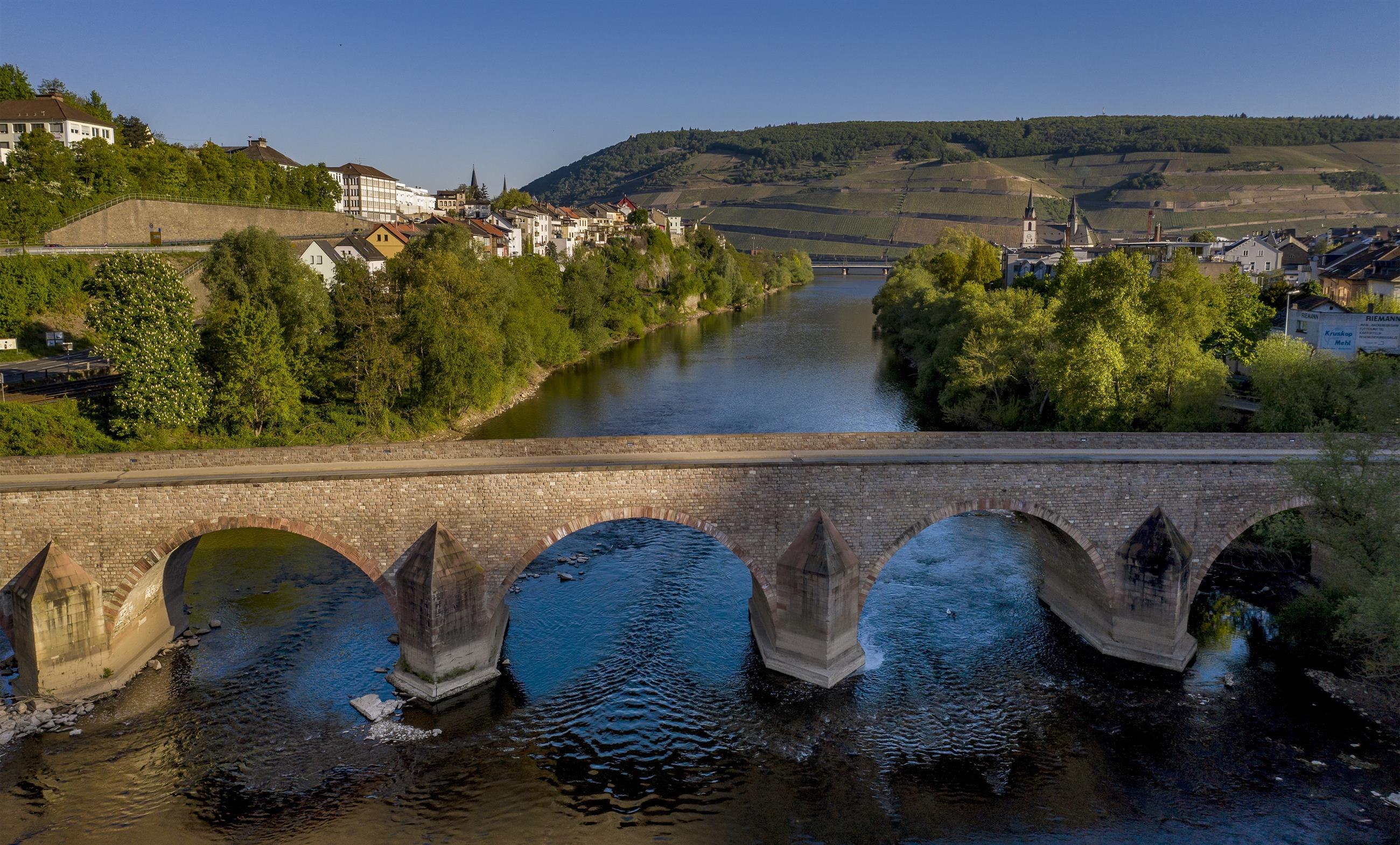
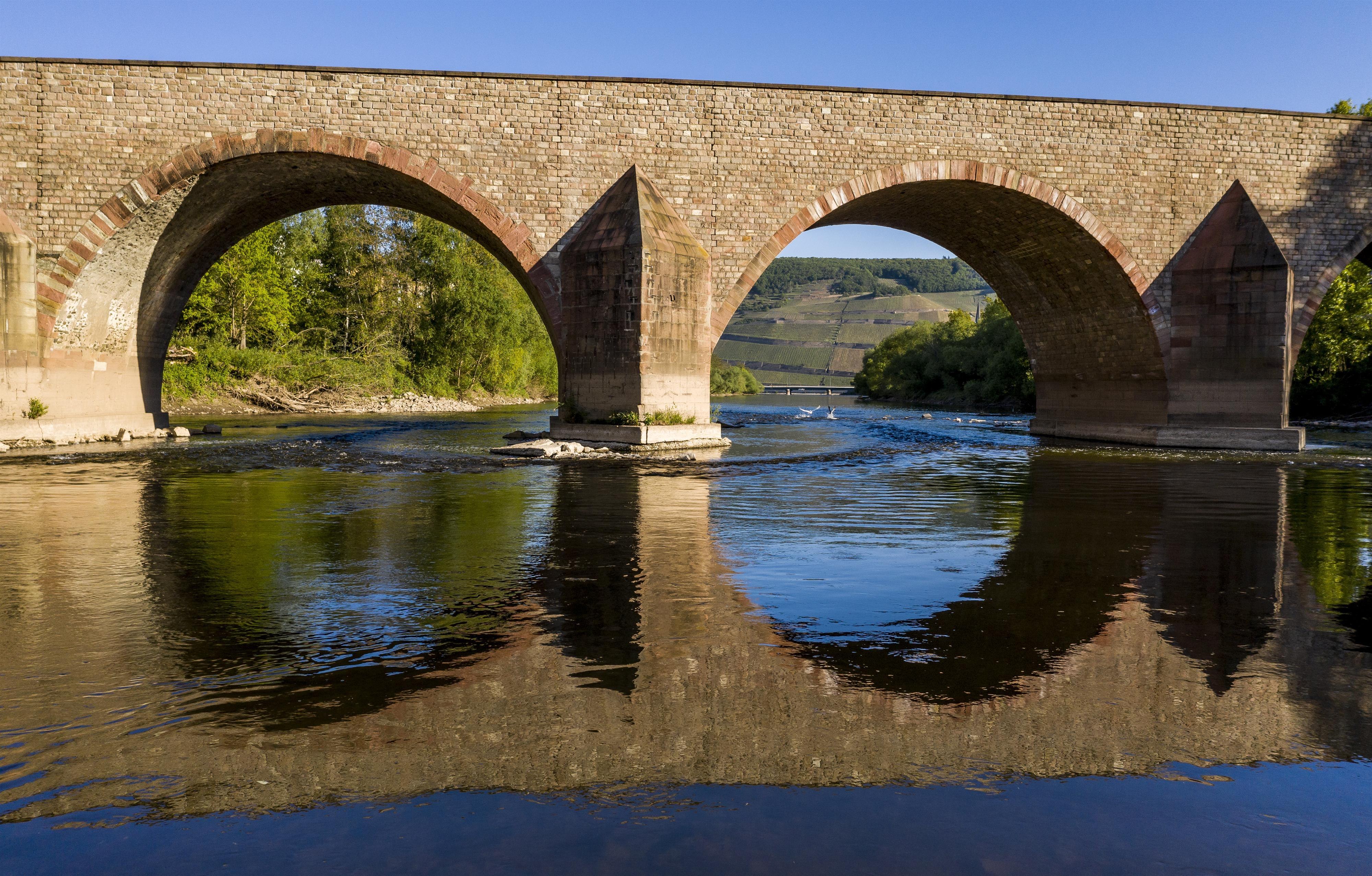
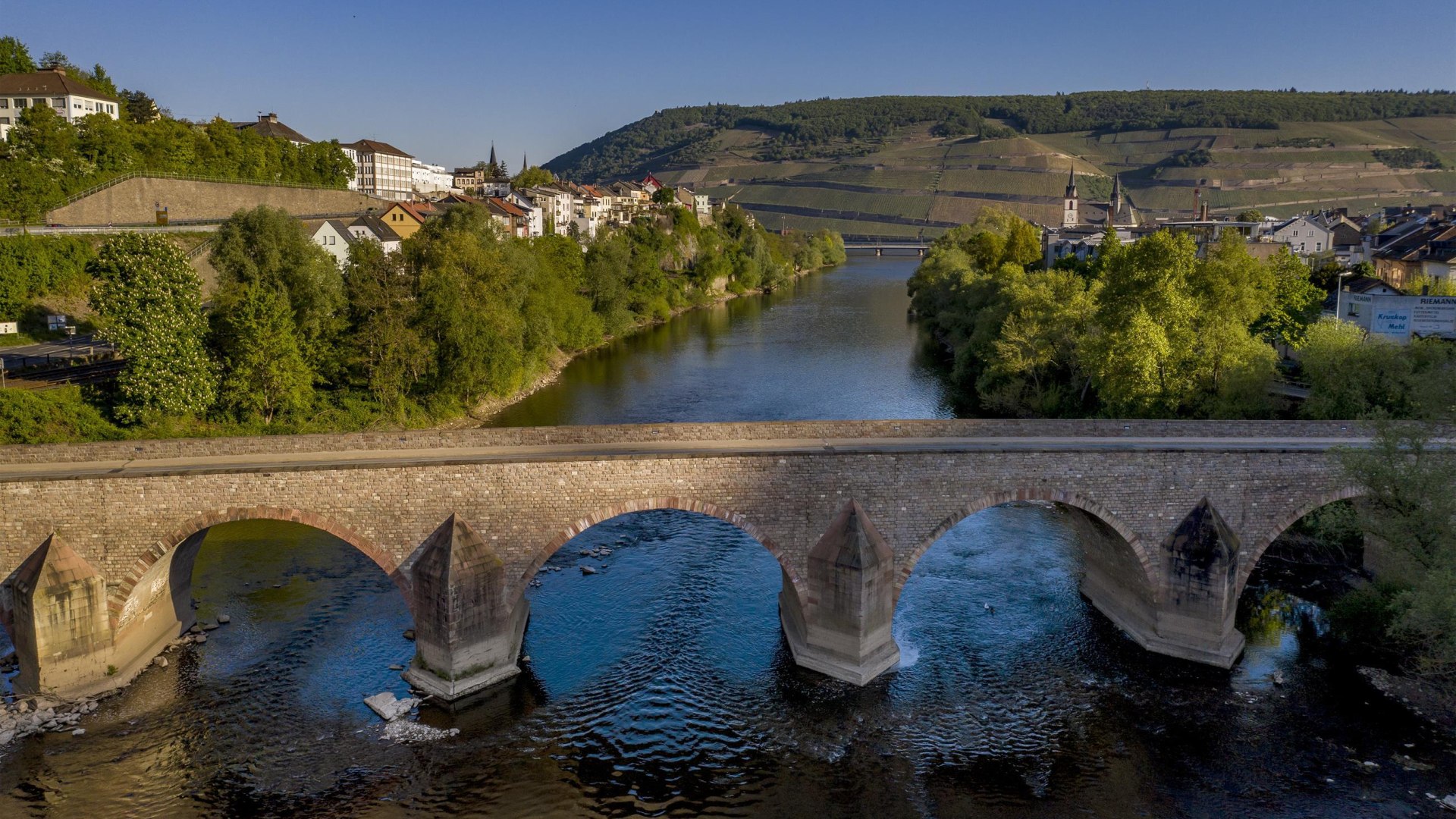
Drususbrücke
Rheinkai 21, 55411 Bingen am Rhein
The bridge chapel in the land pier of the Drusus Bridge is probably the oldest preserved bridge chapel in Germany and the only underground one.
The bridge chapel in the Drusus Bridge, 2021. Unfortunately, we do not have a current photo of the interior of the chapel in the city archive, hence this one from Wikipedia. Marion Halft: Early Romanesque bridge chapel under the Drusus Bridge, Bingen on the Rhine. CC-BY SA 4.0. Carved from the slate rock of the right bank of the Nahe, it lies on the axis of the Nahe Bridge 4.50 meters below the current street level. A semicircular arch ceiling "in cleanly hammer-dressed rubble masonry with ancient wide mortar joints" covers the space.
The indicated window openings of the chapel, which measures approximately 3.8 x 3.8 m, are now bricked up. Their existence may suggest that in earlier times it was not enclosed by the pier, but protruded from it or even stood outside the pier. The Darmstädter Zeitung reported in 1877 that one window once had "a tiny light inlet," which is now closed, and further descriptions from the last century mention a light shaft.
Finally, this important connecting piece of a heavily frequented overland road, built in 989 by Archbishop Willigis, was repeatedly made impassable for military tactical reasons and restored again and again.
During the great destruction of Bingen by French troops in 1689 during the Nine Years' War (War of the Palatine Succession), the Drusus Bridge once again fell victim to military action. Due to lack of funds, it could only be temporarily repaired with wooden braces in 1699. It was not until 1772 that stone repairs were made, which lasted until 1945 when the Wehrmacht blew up one of the bridge arches to prevent the advance of American troops. Made passable temporarily by American pioneers, it was restored in 1951/52 and widened by 3 meters.
The bridge chapel once bordered directly on the cellar of the inn "Drusus Bridge." With the demolition of the building in July 1972 and the subsequent expansion of the intersection at the Drusus Bridge, a new access with an ante-room was created. Since May 31, 1979, the bridge chapel has been accessible again through guided tours and is open to everyone on "Heritage Open Day."
Whether the bridge chapel is identical to the Boniface Chapel, as is suggested in some older documents, has not yet been proven.