Der Alte Kran
Hafenstraße 5, 55411 Bingen am Rhein
Old yet originally preserved, the old Bingen harbor crane.
The old Rhine crane stands next to the former customs administration at the Cultural Bank of Bingen. A crane has been documented here as early as the 15th century. The current rotating and luffing crane was probably built starting in 1613 according to the plans of the Aschaffenburg master builder Riedinger. After a renovation in 1819, the structure was saved from demolition by the then new monument protection law in 1907. Heavily damaged in World War II, the crane was restored starting in 1950 and was functionally restored from 2005 to 2007.
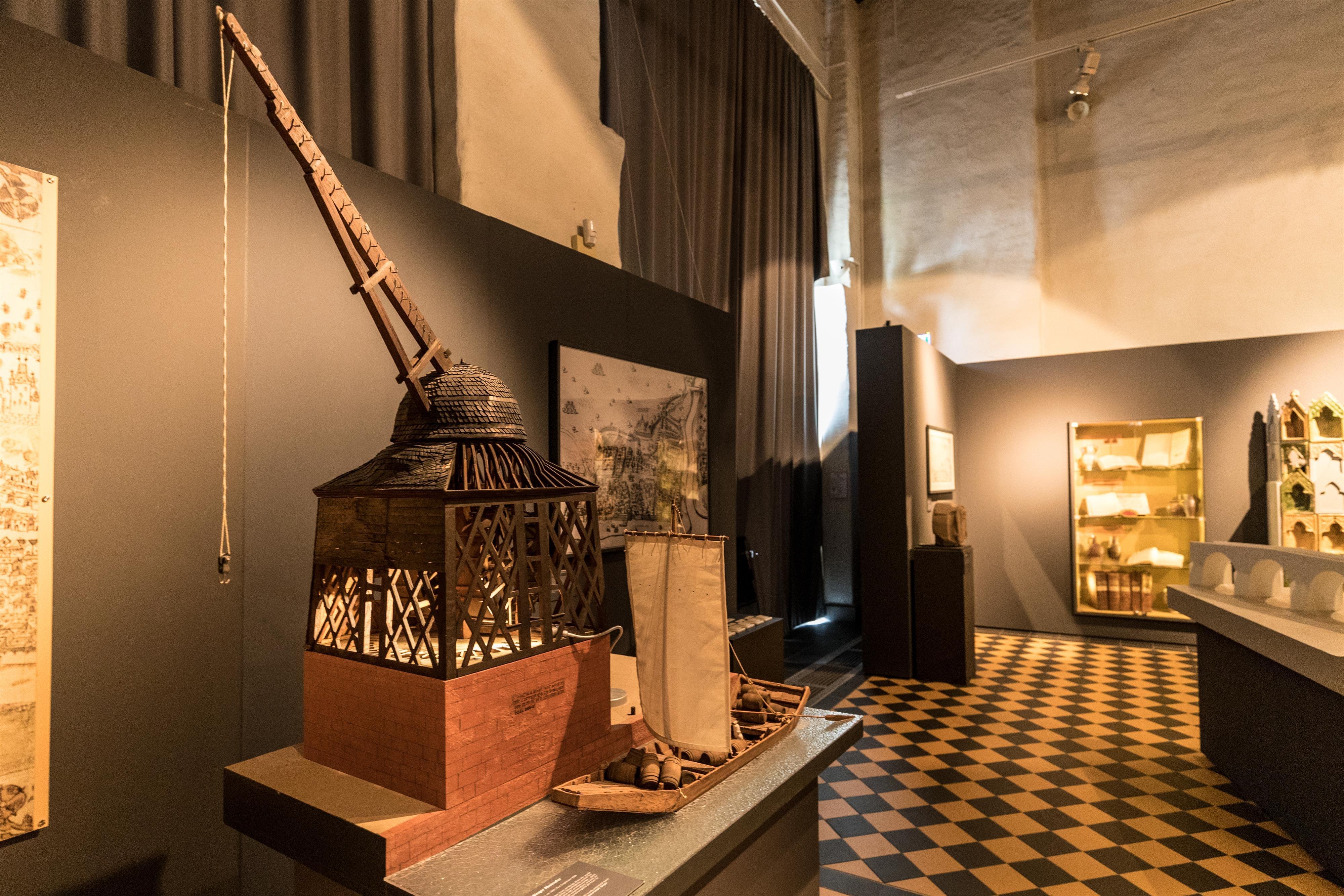
The crane is powered by human strength through two large drive wheels. The upper part of the dome with the load arm can be turned using a large lever. Primarily, wine, salt, and grain were loaded here. For the latter two, Bingen had stacking rights. As part of the State Garden Show Bingen 2008, the crane was repositioned back at the water by constructing a small harbor basin.
Opening hours: Easter to the end of October - Sundays and holidays 12-4 PM
Craning tours with crane demonstrations at 4:00 PM each time
Sunday, June 1, 2025, World Heritage Day
Sunday, July 6, 2025, Cultural Bank Festival
Sunday, August 10, 2025 Days of Industrial Culture Rhine-Main
Sunday, September 14, 2025, Monument Day, Theme "Valuable: Priceless or Irreplaceable"
Craning openings and crane demonstrations are free of charge, no registration required.
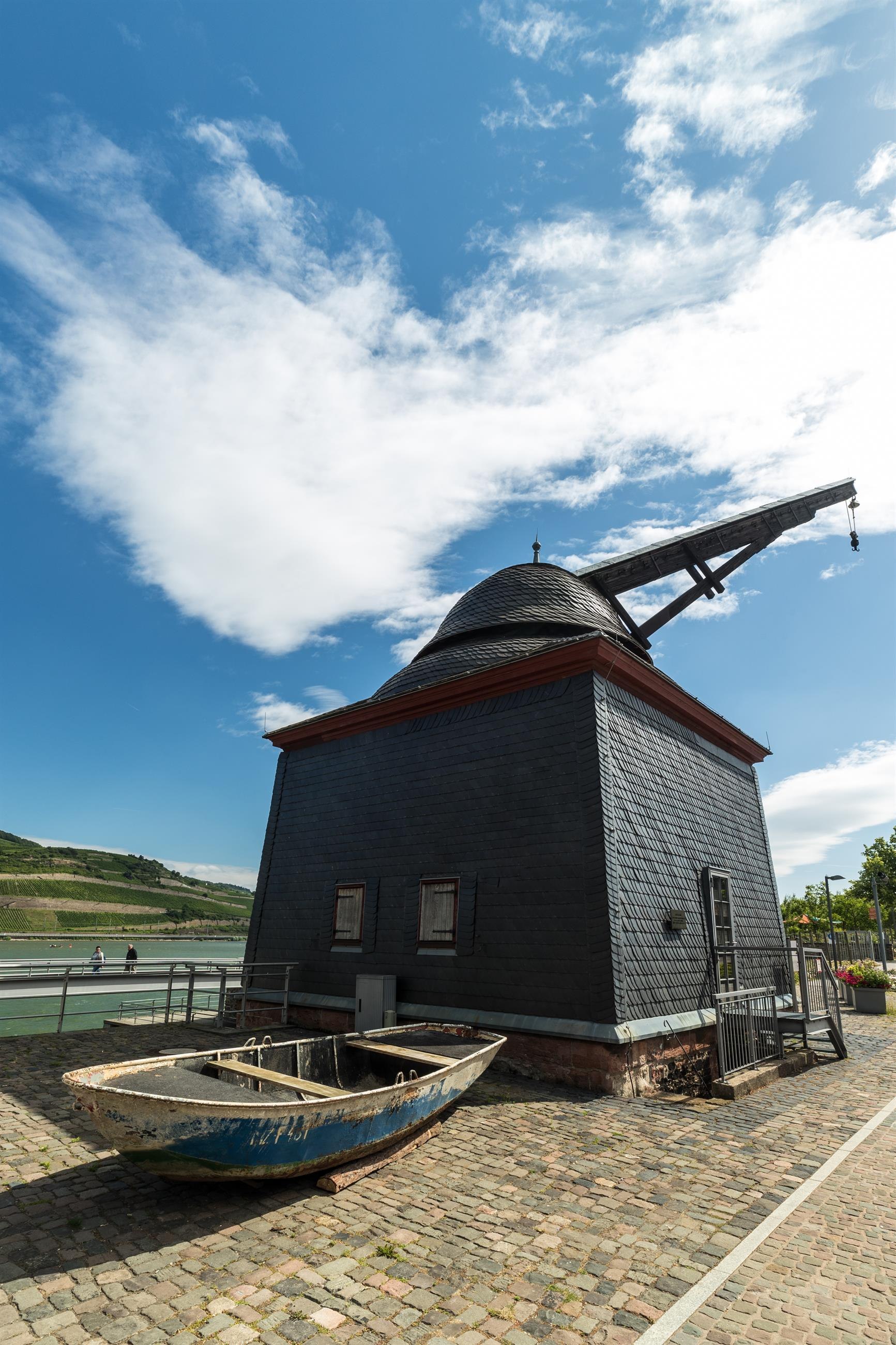
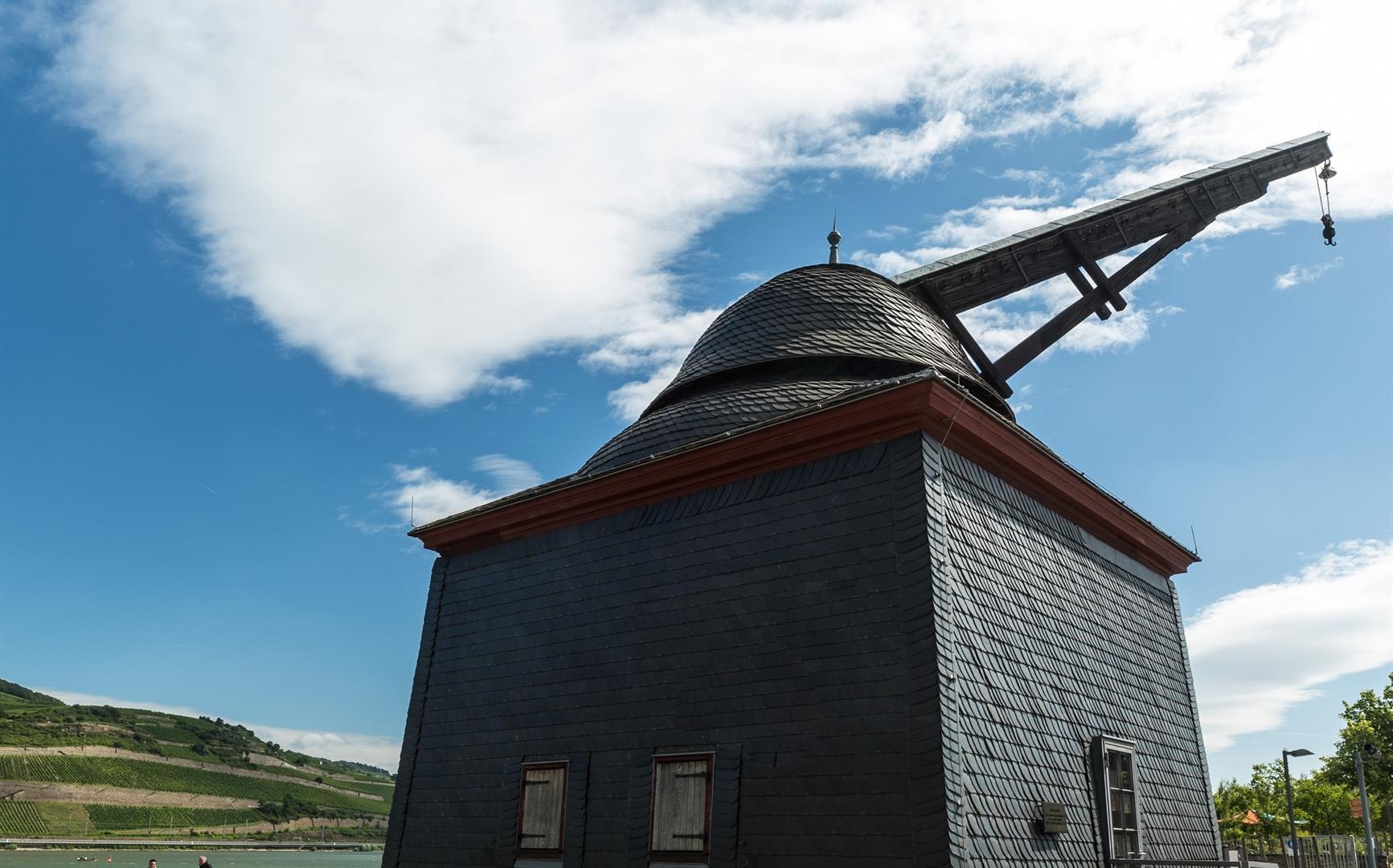
The harbor crane, with a rotating boom and dome roof, stands next to the former customs administration on the site of the former harbor.
The crane house (side length approx. 7 m, height to roof edge approx. 6 m) is a half-timbered construction made of oak beams, with the exterior walls consisting of wooden cladding. The rotating, bell-shaped crane dome is tiled with slate and capped with a tower ball. The boom consists of a massive oak beam along with supporting beams and is clad with lead foil. A crane has been documented here as early as the 15th century. An inscription found on a pedestal stone in 2007 indicates the date of the foundation stone laying as August 7, 1487 (St. Afra). It is said to have been built in just 78 days.
The wooden framework of the current crane has been dendrochronologically dated to 1785–87. After further renovations in 1819, the crane was decommissioned in the second half of the 19th century. The structure was preserved from demolition due to the new monument protection law in effect in 1907. Heavily damaged in World War II, the crane was restored starting in 1950. A comprehensive restoration was carried out in 2005. In 2007, a water basin with a connection to the Rhine was added to the crane.